


Advice
Lawns need care and attention too
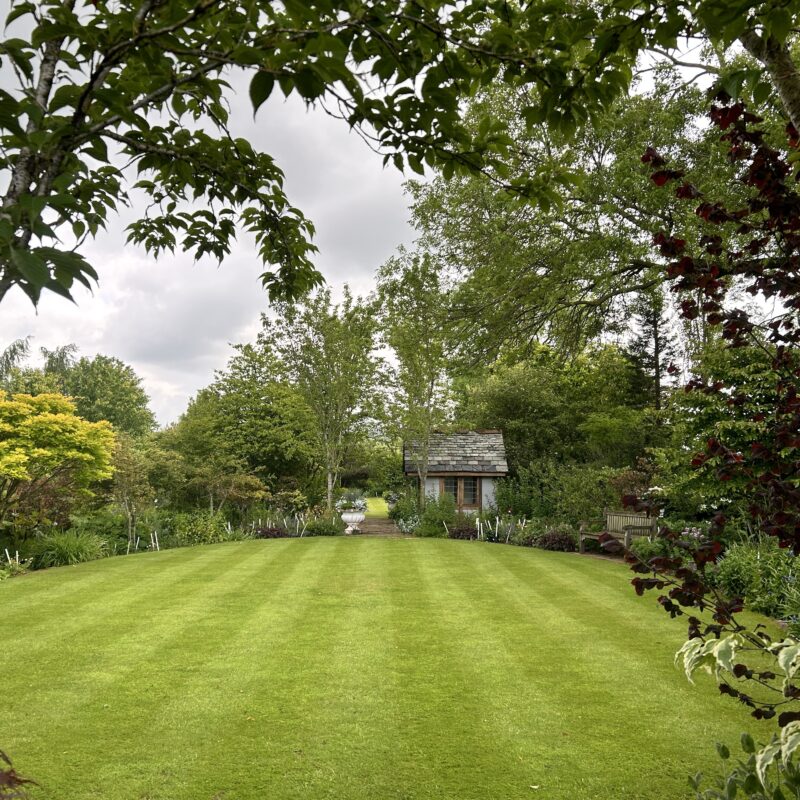
As spring arrives, attention often turns to planting pots and refreshing borders, but the lawn also needs our care after the rigours of winter. Following an especially wet season, lawns in particular benefit from some early maintenance to ensure they are ready for summer.
At Larch Cottage, gardeners are already preparing the grounds to welcome visitors back to the private gardens, with lawns receiving some much-needed attention.
The first step is to clear debris using a spring tined rake. This removes dead grass and improves airflow at the surface. From there, aeration is key as lawns can become compacted over winter, restricting the movement of water, air and nutrients. By spiking the ground with a garden fork to a depth of around 10–15cm, drainage is improved, oxygen and nutrients can reach the roots which grow deeper, resulting in stronger, more resilient grass. In turn this reduces the build-up of thatch and moss, often a sign of an unhappy lawn. Brushing horticultural sand into the holes can further enhance these benefits.
Your lawn is now ready for its first cut. Choose a dry day and set the mower to its highest setting to avoid placing unnecessary stress on the grass. Feeding is the next essential step; apply a high nitrogen lawn fertiliser to encourage green growth as the weather warms up.
If your lawn has a lot of moss apply Ferrous sulphate as it is a highly effective, fast-acting iron treatment that turns moss black within hours, killing it to allow grass to thrive. Follow this by scarifying the lawn to remove excess thatch and moss, as this also helps to allow air, water, and nutrients to penetrate the soil more effectively. If you have a lot of moss, it is often a sign that your lawn is too acidic, so applying lime will help to neutralise the ph. As conditions warm to a consistent 8 degrees, any thin or damaged areas can then be reseeded to encourage even coverage.
Finally tidy up the edges using a half-moon tool or sheers.
Mow once a week in summer but raise the cutting height to around 6-10cm to help the grass retain moisture and prevent scorching. If we have a dry spell water deeply but infrequently (once or twice a week) rather than daily, to encourage deep roots. Use grey water or stored rainwater if possible.
With a little hard work at the start of the season, you will have a healthy, vibrant lawn throughout the warmer months.
