


Advice
Let’s get dirty… and talk about compost.
Let’s get dirty… and talk about compost.
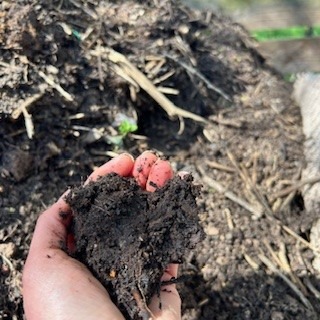
Too often overlooked, compost is a key element in the success of your garden. Many of us pick up a bag from the supermarket or DIY store without giving it a second thought, however it underpins everything in the garden. By making your own compost you not only save money but create a natural link between the plant and the soil, something that cannot be replicated by most bought peat free composts. The Victorian saying, “A penny for the plant, and a pound for the hole.” is so true, there is no point buying an expensive, prized plant and planting it in a poorly dug, unconditioned or nutrient starved hole. If the growing matter isn’t right then the plant cannot thrive.
Think of composting as assembling the perfect salad: variety is everything. There are few simple rules to follow, but by the end of the season you should have your own rich compost, something your plants (especially your vegetables) will be thankful for.
At the heart of successful composting is heat. A well-managed compost heap should reach around 60°C, hot enough to break down and sterilise the organic matter efficiently while destroying weed seeds. To achieve this, you’ll need the right blend of green matter, moisture, and oxygen. As the materials decompose, they generate nitrogen, which in turn fuels the heat needed for the process.
Build your compost in layers using garden clippings. Grass cuttings are excellent, but use them sparingly to avoid creating a dense, airless mass. Don’t overlook cardboard either—it’s a valuable addition as well.
Once you’ve built a layer around a foot deep, sprinkle over a thin layer of garden soil or a nitrogen-rich activator such as chicken manure or a compost accelerator like Garotta. This helps kick-start decomposition and keep temperatures rising.
If you are fortunate enough to have more than one compost bay turn it into the new bay at least twice in the year ideally three times to introduce oxygen and ensure decomposition continues. If you only have the one bay empty it out and rebuild it, this extra step makes a noticeable difference.
Leaf mould deserves its own space and time to break down separately, but once ready, it makes an excellent addition to your finished compost, improving texture and moisture retention.
Here at Larch Cottage, we’ve fully embraced peat-free growing, investing in a purpose-built steriliser to produce our own compost on site—proof that with a little care and attention, composting can be both sustainable and deeply rewarding.
